Mendeleev's mom died soon after they arrived in Moscow. I think this helped Mendeleev excel because he was already a very motivated person but this unexpected event further pushed Mendeleev to achieve his obsession of giving order to the periodic table. A death of a loved one has the power to stop one's dream but it also has the power to motivate. In this case it seems that Mendeleev's mom was very supportive of his desire to solve the mystery of the elements and probably even a key factor of his achievement and infkuence therefore Mendeleev was able to use her death as motivation.
Thursday, January 24, 2013
History of The Periodic Table
Believe it or not but the Earth is made of only 92 elements. One of the combinations of these elements forms human beings. Among these human beings were several men who were concerned with the same issue: Is there any order to the elements found in seemingly random areas of the Earth? Before these elements could be assigned an order someone had to understand how they worked. John Dalton for the most part did just that. His theory that the "ultimate particles", atoms, were like building blocks that formed everything everywhere. His ideas lead to the beginning of a scientific quest to understand the order of atoms. He was the first to impose order to the elements by grouping them by weight. Unfortunately the weights he believed to be correct were incorrect but many were very close. A believer in Dalton's theory, Bezalius was obsessed with composing order upon the elements. He himself set out to weigh each atom using intricate glass blown equipment he created himself. In 1824, thanks to his mad glass blowing skills, he discovered an element entitled Silicon. His research involved studying over 2,000 chemical compound in order to find the relative weights of 45 elements. Innovative ways of setting order to the elements continued as Dobereiner focused more on the chemical properties and characteristics of the elements. He proposed that elements that behave similarly must be part of a family. Later a man by the name of Mendeleev, dubbed the Russian Leonardo Divinci, came up with a scientific breakthrough in which he made ordering the elements a little more fun and interesting (Its about time!). He came up with a solitaire style card game in which he wrote all the elements down along with their information onto separate cards. The objective was to put the cards in some sort of orderly manner into an organized table. The dedicated fellow spent three days obsessing over the game until he finally went to bed and in a dream an ingenious table of elements appeared to him. Another innovative idea was the brain baby of Cannizaro who said that equal amounts of gasses had equal amounts of molecules therefore benefiting in the weighing process of the elements. Newlands proposed the "Law of Octaves" which truthfully stated that every 8th element when arranged by atomic weight had repeating characteristics. Mosely enhanced the accuracy of the periodic table by arranging the elements by atomic number due to the recent discovery of the proton. This table didn't disagree with Mendeleev it just made it more accurate.
Mendeleev's mom died soon after they arrived in Moscow. I think this helped Mendeleev excel because he was already a very motivated person but this unexpected event further pushed Mendeleev to achieve his obsession of giving order to the periodic table. A death of a loved one has the power to stop one's dream but it also has the power to motivate. In this case it seems that Mendeleev's mom was very supportive of his desire to solve the mystery of the elements and probably even a key factor of his achievement and infkuence therefore Mendeleev was able to use her death as motivation.
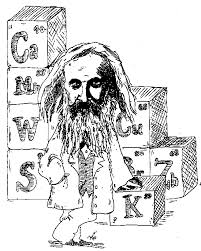 A PHOTO DEPICTING MENDELEEV
Mendeleev's mom died soon after they arrived in Moscow. I think this helped Mendeleev excel because he was already a very motivated person but this unexpected event further pushed Mendeleev to achieve his obsession of giving order to the periodic table. A death of a loved one has the power to stop one's dream but it also has the power to motivate. In this case it seems that Mendeleev's mom was very supportive of his desire to solve the mystery of the elements and probably even a key factor of his achievement and infkuence therefore Mendeleev was able to use her death as motivation.

Subscribe to:
Post Comments (Atom)
Awesome, Blake! Very well constructed paragraph and excellent information. I appreciate your insight on motivation.
ReplyDelete